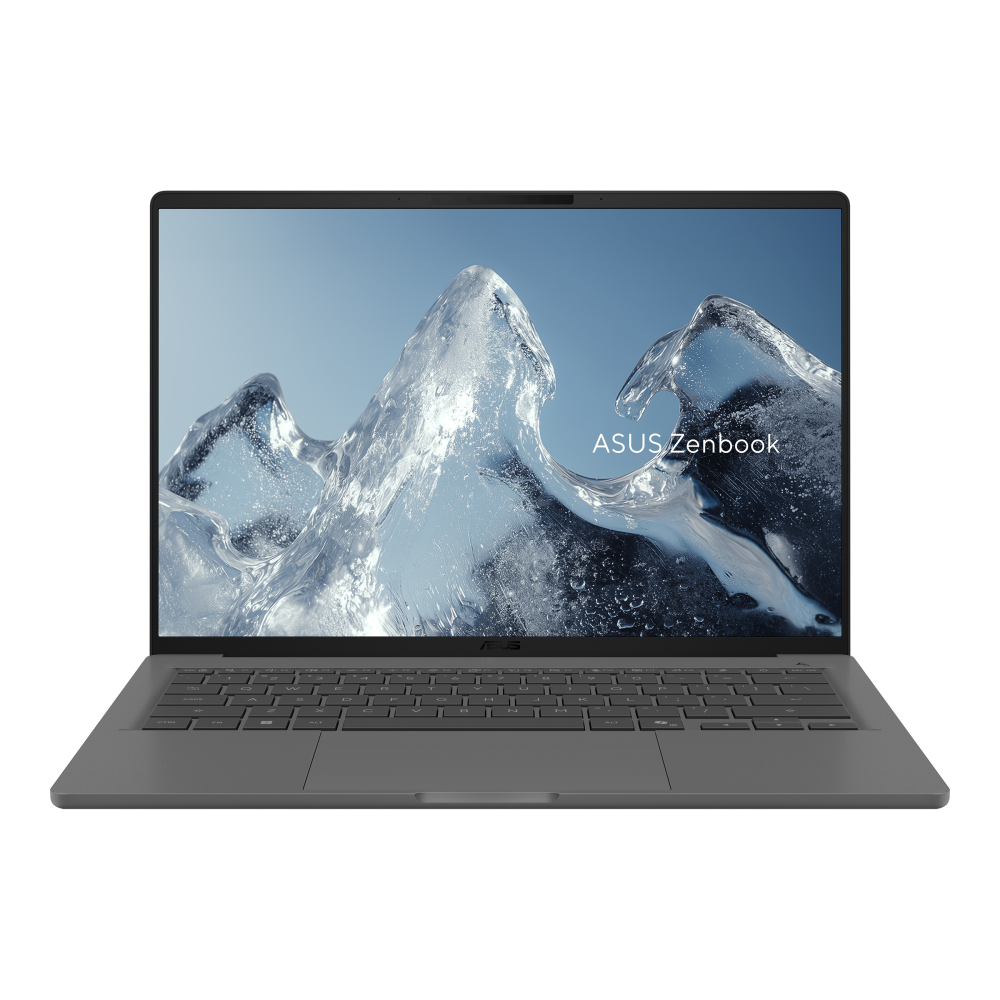
ASUS Zenbook A14 Review: An Impossibly Light Copilot+ Laptop
Official announcement republished verbatim (not rewritten or translated); source linked on this page.(Original language:English)

* Based on Geekbench 6.5 Multi Core benchmark 18
* Based on UL Procyon ® Office Productivity benchmark 23
* Based on Cinebench R24 Multi Core benchmark 19
* Based on Diablo IV frame rate output 20
* Based on Open Data Blender Benchmark 21
Leading local AI performance and precision
* Based on UL Procyon ® AI Benchmark 22
Wide bandwidth, hyper speed transfer
Work unplugged without performance losses
Cinebench R24 (performance benchmark)
IPS stands for in-plane switching, a type of LED (a form of LCD) display panel technology.
Unless otherwise stated, all performance claims are based on theoretical performance. Actual figures may vary in real-world situations.
The actual transfer speed of USB 3.0, 3.1, 3.2, and/or Type-C will vary depending on many factors including the processing speed of the host device, file attributes and other factors related to system configuration and your operating environment.
Ultrabook, Celeron, Celeron Inside, Core Inside, Intel, Intel Logo, Intel Atom, Intel Atom Inside, Intel Core, Intel Inside, Intel Inside Logo, Intel vPro, Itanium, Itanium Inside, Pentium, Pentium Inside, vPro Inside, Xeon, Xeon Phi, and Xeon Inside are trademarks of Intel Corporation or its subsidiaries in the U.S. and/or other countries. Product specifications may differ from country to country. We recommend that you check with your local dealers for the specifications of the products available in your country. Colors of products may not be perfectly accurate due to variations caused by photography and monitor settings.Due to photographic variables and conditions, actual product appearance may differ from images shown on this site.Although we endeavor to present the most accurate and comprehensive information at the time of publication, we reserve the right to make changes without prior notice. Price may not include extra fee, including tax、shipping、handling、recycling fee.
* Result from Mobile Mark 2014 office productivity.
Specifications
- Processor
- Snapdragon X (Oryon)
- Display
- 14-inch OLED, 1920x1200, 60Hz
- Weight
- 0.98 kg
- Memory / Storage
- 16GB / 1TB SSD
- Battery (rated)
- Up to ~32 hrs video playback
Sources
Specs and launch info are cited from official sources; the analysis is our own original writing.
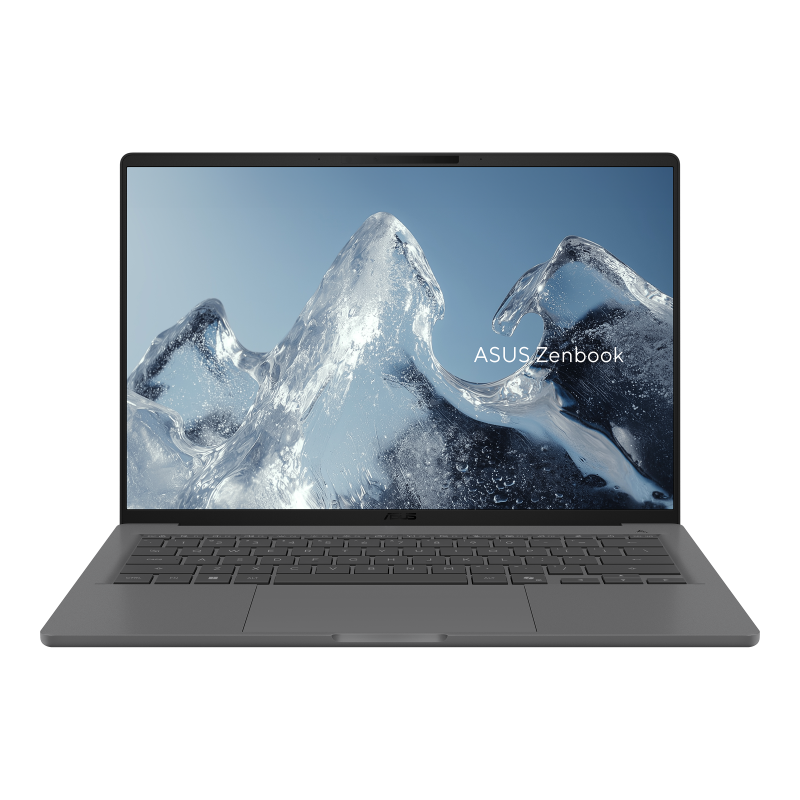
ASUS pushed 'light' to an almost absurd point. The moment you pick up the Zenbook A14 you suspect something is missing inside — yet the screen, keyboard, and battery are all there. The analysis below is our own; specs and launch facts are cited from official sources (see links at the end).
Key configuration: a Snapdragon X (Oryon) platform, a 14-inch OLED (1920×1200) panel, a roughly 0.98kg body, 16GB of memory with a 1TB SSD, and an ASUS-rated ~32 hours of video playback. That's a remarkably complete spec sheet for a sub-1kg machine.
Our take: the Snapdragon X battery life is the real selling point — a full day of writing and browsing without reaching for the charger, and at under 1kg it's almost unbeatable to carry. The cost is the Arm ecosystem: a few legacy x86 apps still run under emulation, so check compatibility for heavy pro software; the 60Hz screen is also conservative for the price. In short, as a featherweight, long-endurance writing-and-browsing laptop it fits perfectly; as a primary creative machine, think through compatibility and refresh rate first.
An honest note: official pricing and regional availability follow ASUS's local announcements; processor, memory and storage options can vary by region, and battery life is an official rated figure that depends on real-world usage.
Pros
- Sub-1kg; unbeatable to carry
- Pleasing OLED color
- Battery long enough to forget the charger
Cons
- Arm compatibility is still a hurdle
- 60Hz display is conservative for the price
- Limited ports
Discussion