火花四濺:NVIDIA在IFA 2026推進本地AI
以下為官方發布原文照登(未改寫、未翻譯),來源連結見本頁。(原文語言:英文)
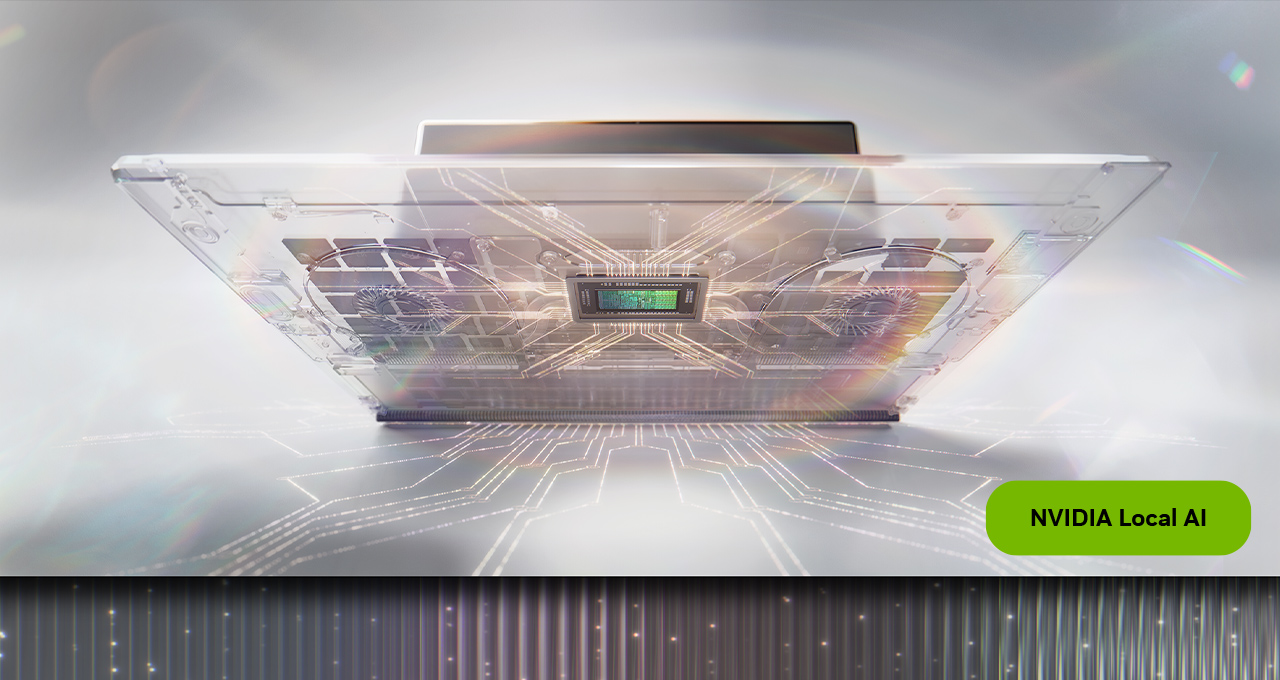
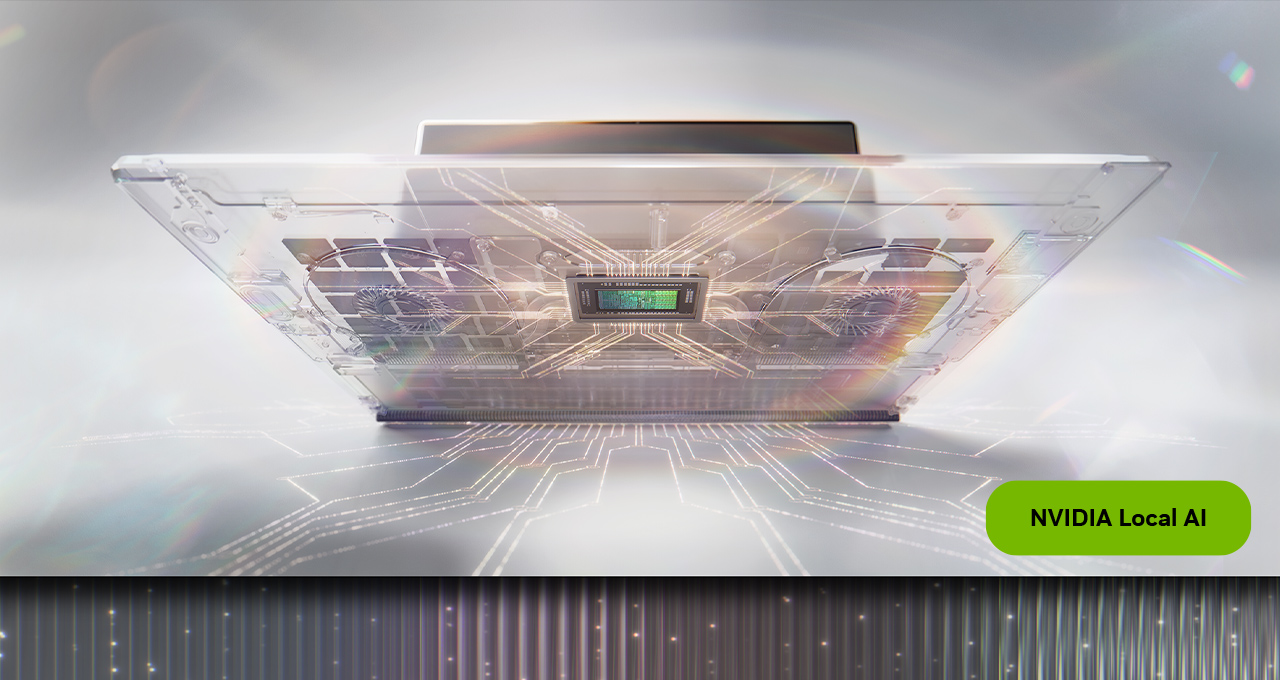
Frontier intelligence is going local. At IFA 2026, NVIDIA, Microsoft and its partners are teaming up to provide faster inference and new tools that make agents easier to set up and run locally on NVIDIA hardware. New compact NVIDIA RTX Spark Windows PCs are also coming in October to give AI enthusiasts, developers and creators more ways to run capable agents locally and securely.
Also, August was a busy month for local AI :
Getting a local agent up and running with local models required some effort — choosing a model, finding a compatible inference server, dialing in quantization settings and keeping everything updated. That friction is disappearing on RTX and DGX systems.
Three of the most widely used agent apps will offer simplified local model setup on Windows, each built on llama.cpp and incorporating NVIDIA’s latest inference optimizations. The new setup experiences are designed to reduce manual configuration and make it easier to get local agents up and running.
Last month, Perplexity introduced its Portable Computer agent , giving users a simple way to run Perplexity locally on Linux systems like NVIDIA DGX Spark with the models, orchestration and tools packaged into a single app experience.
Perplexity Portable Computer is available on NVIDIA RTX GPUs with at least 24GB VRAM running on Linux, with support on Windows coming soon, bringing that same streamlined setup to a broader group of PC users. Users can run complete workflows locally without consuming credits, while selectively escalating parts of a task to one of 15+ frontier models in the cloud when additional research or reasoning is needed. Portable Computer asks for permission before sending content to the cloud, helping users keep sensitive information on their device. Here’s some example use-cases:
Hermes Agent — developed by Nous Research — is a general-purpose agent used by millions that excels at reliability and self-improvement. Model- and provider-agnostic, Hermes is built to run all day on local systems, making RTX PCs, RTX PRO workstations and DGX Spark a natural fit.
Configuring a local model in Hermes will provide users with one-click setup across RTX and DGX systems on Windows. The agent will automatically detect the NVIDIA GPU, select an appropriate model and configuration, and run it through integrated llama.cpp with NVIDIA inference optimizations already in place, eliminating manual model downloads and tuning. Support for Linux is coming soon.
Once it is running, Hermes works the way it does anywhere else. It uses tools, maintains context across tasks, remembers information between sessions and creates reusable skills over time, allowing the agent to become more capable with continued use. Running the model locally on a GPU keeps performance fast while keeping data on the system.
One-click local model setup is available now on Windows, with support coming soon to Linux. Learn more about Hermes Agent .
OpenClaw has become one of the defining projects of the open-agent movement — the largest AI project on GitHub, with more than 380K stars and a fast-growing community that’s building tools and skills across research, engineering, project management and everyday productivity.
NVIDIA, Microsoft and OpenClaw have been working together to make that experience easier to set up on Windows PCs. To reduce onboarding friction, the OpenClaw Windows App simplifies the process of setting up an optimized local model on any RTX GPU with at least 24GB of VRAM.
Learn more in the OpenClaw blog .
Inference performance is critical to keeping local agents responsive. NVIDIA is continuing to collaborate with the open-source llama.cpp and vLLM communities to accelerate agentic workloads across local NVIDIA platforms.
llama.cpp delivers up to 1.9x higher throughput through kernel optimizations on a GeForce RTX 5090, enhanced speculative decoding techniques and faster prefill.
vLLM delivers 1.2x on RTX PRO 6000 Blackwell Workstation Edition and up to 1.4x on two DGX Spark clusters. New XQA attention kernels in FlashInfer and backend optimizations help to accelerate inference across both platforms.
These gains are available on the llama.cpp and vLLM inferencing backends.
Users can also experience these via the LM Studio and Ollama applications.
More than half of U.S. households have two or more PCs, and much of that computing power sits idle throughout the day. NVIDIA Personal AI Router (PAIR) is a free, open source software tool that puts those systems to work together for local AI.
Agentic workflows often break complex tasks into smaller jobs that can run in parallel, but performance can slow when every request is competing for the same GPU. PAIR automatically discovers compatible PCs on a local network and routes independent inference requests to whichever system has capacity. It works with Ollama and LM Studio and can adapt as devices join or leave the network.
For example, a user could ask Hermes to create a “Sunday Reset” plan by sorting through a cluttered inbox and prioritizing what needs attention now, what can wait and what can be skipped. Hermes can split that work across multiple subagents, while PAIR distributes those jobs across available PCs instead of having them all wait on a single GPU.
The result is more compute for local agents, with more tasks running in parallel and the flexibility to move AI workloads to another PC while the main system is being used for gaming, creating or other work.
The NVIDIA PAIR beta is available for Windows, macOS and Linux through both graphical and terminal interfaces, supporting NVIDIA GeForce RTX 20 Series GPUs and newer, NVIDIA RTX PRO workstation GPUs (Turing architecture and newer), NVIDIA DGX Spark and Apple M4 or newer silicon.
Check out the NVIDIA tech blog to get started with NVIDIA PAIR.
Open image and video models enable artists to experiment with Creative AI models on PCs. This enables artists to iterate and explore concepts and ideas, without the dreaded token anxiety and keep more of their creative work private and on-device.
CyberLink’s new PhotoDirector AI PC Mode is one of the first applications to integrate these diffusion models directly into a creative software, and turn them into a creative tool at the finger tips of the artists. Coming to PhotoDirector 365 and optimized for NVIDIA RTX Spark when it launches, AI PC Mode users are getting AI-powered editing tools for generative editing, image enhancement, object and distraction removal, background removal and replacement, portrait refinement and the creation of entirely new visuals — with the flexibility to choose between local or cloud processing, depending on the task.
On NVIDIA GPUs, PhotoDirector uses TensorRT-RTX and FP8 to accelerate local AI.
Start using Cyberlink’s PhotoDirector 365 photo editing software and learn more about PhotoDirector AI PC Mode, launching with RTX Spark in October.
NVIDIA RTX Spark is coming this October— and at IFA 2026, partners are showing off their hardware. At IFA, newly announced designs join the existing six OEMs shipping in October. Acer showed its compact desktop RTX Spark concept, and Lenovo announced its Yoga Pro 9n and Yoga 9n 2-in-1.
RTX Spark is a new beginning for Windows PCs. One PC built for creators, gamers and AI agents. With a powerful 1 Petaflop RTX Blackwell GPU, up to 128GB of unified memory and a highly efficient 20-core Grace CPU, RTX Spark delivers incredible performance and efficiency. This superchip enables high performance thin laptops with all day battery life and compact desktops to power always-on agents. Paired with the new Windows Agent framework, it enables agents that run safely in the background under OS level control.
Last week at Gamescom, Electronic Arts, Embark and Ubisoft were among the latest game publishers and developers bringing their blockbuster titles to NVIDIA RTX Spark Windows PCs. They join the publishers that announced RTX Spark support at COMPUTEX in May, including KRAFTON, NetEase, Riot Games and XBOX. Read more .
Sign up to be notified when RTX Spark laptops and desktops are available.
🎮 NVIDIA Brings New RTX Tech and Games to Gamescom — NVIDIA released DLSS 4.5 Ray Reconstruction , featuring a new second-generation transformer model for improved image quality in ray-traced and path-traced games. Gamescom also brought new RTX announcements for titles including 007 First Light, CONTROL Resonant and Gears of War: E-Day, plus expanded game support for the upcoming NVIDIA RTX Spark.
🐋Introducing DeepSeek Harness — DeepSeek’s new open source harness pairs with DeepSeek-V4-Flash to power local agentic coding workflows on NVIDIA DGX Station and multi-DGX Spark setups.
📊 MLPerf Client v2.0 Expands AI PC Benchmarking — MLCommons released MLPerf Client v2.0 , developed in collaboration with NVIDIA and other industry leaders. The update adds new benchmarks for agentic AI and image generation, alongside expanded LLM testing for real-world local AI workloads.
See notice regarding software product information.
規格
- 上市日期
- 2026年10月
- 主要功能
- 簡化本地模型設定,支援llama.cpp,整合NVIDIA最新推理最佳化
- 目標使用者
- AI愛好者、開發者和創作者
- GPU VRAM
- 24GB或以上
- 作業系統
- Windows
- 代理應用
- Hermes Agent, Perplexity Portable Computer
來源連結
規格與發布資訊引用自官方來源;本文評析為本站原創。
IFA 2026上,NVIDIA正攜手Microsoft及合作伙伴,推出一系列旨在加速本地AI的創新舉措。新款RTX Spark Windows筆記型電腦將於10月上市,專為AI愛好者、開發者和創作者設計,提供更為高效便捷的本地AI體驗。
這些筆記型電腦將支援簡化後的本地模型設定流程。 llama.cpp將被用於三個最廣為使用的代理應用程式中,同時整合NVIDIA最新的推理最佳化,以降低手動配置的難度,幫助使用者更輕鬆地設定本地代理。
雖然定價和上市時間尚未公佈,但這些裝置無疑將為希望在本地執行AI應用的使用者帶來巨大的便利。此外,Hermes Agent等代理應用也將提供本地和雲之間的無縫切換能力。
優點
- 簡化本地模型設定
- 支援NVIDIA最新推理最佳化
- 無縫切換本地與雲環境
討論區