LoRa無線通訊模組為Raspberry Pi增添更多可能性
以下為官方發布原文照登(未改寫、未翻譯),來源連結見本頁。(原文語言:英文)

Need to send data from a Raspberry Pi–based project located beyond your home’s Wi-Fi network range? Sure, you could use a Wi-Fi extender, or a very long Ethernet cable (up to 100m), but there are other, more reliable solutions that we’ll be exploring here.
LoRa is a long-range radio system that can transmit small packets of data at low bit rates (300bps to 50kbps) — ideal for IoT sensors and the like. Its biggest advantage is its resilience to noise and interference, enabling a range of up to 15km (9 miles) in rural areas. LoRa nodes can send data to each other, or you can use a LoRaWAN gateway to receive multiple channels — either an existing one on, say, The Things Network, or your own.
For (much) higher data rates, there’s 4G cellular. We take a look at a couple of add-on solutions here, along with a separate GPS module for ultra-accurate location- and time-stamping.
LoRa uses the ISM (Industrial, Scientific, and Medical) radio bands. Anyone can broadcast here without a licence, but you must adhere to the regional parameters set by local governing bodies (e.g. Ofcom in the UK, FCC in the US, ETSI in Europe). These include limits on radio frequency, duty cycle, and transmission power.
There are also typically strict limitations for transmitting on other radio bands such as FM. Always check the laws for your jurisdiction before proceeding.
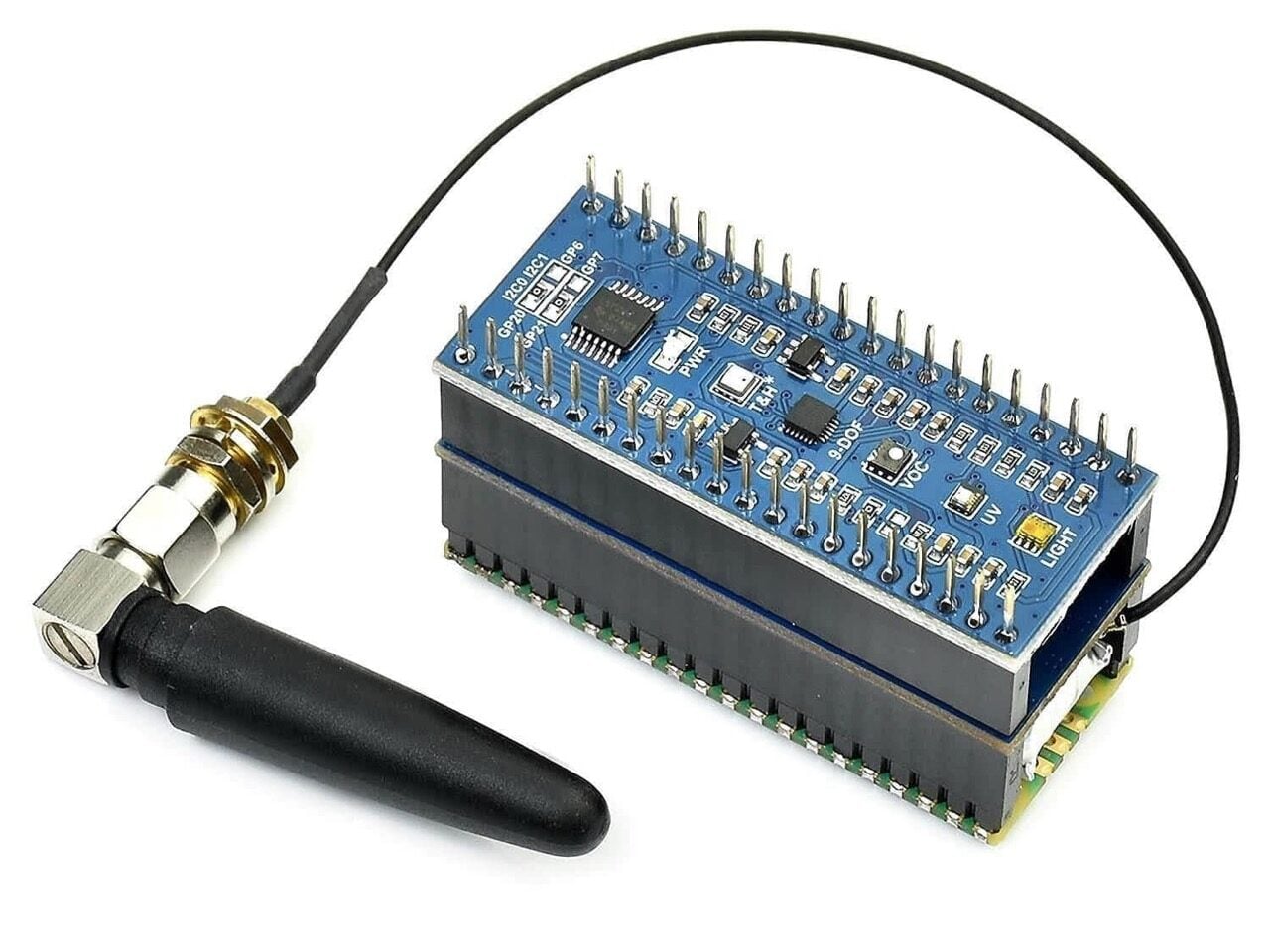
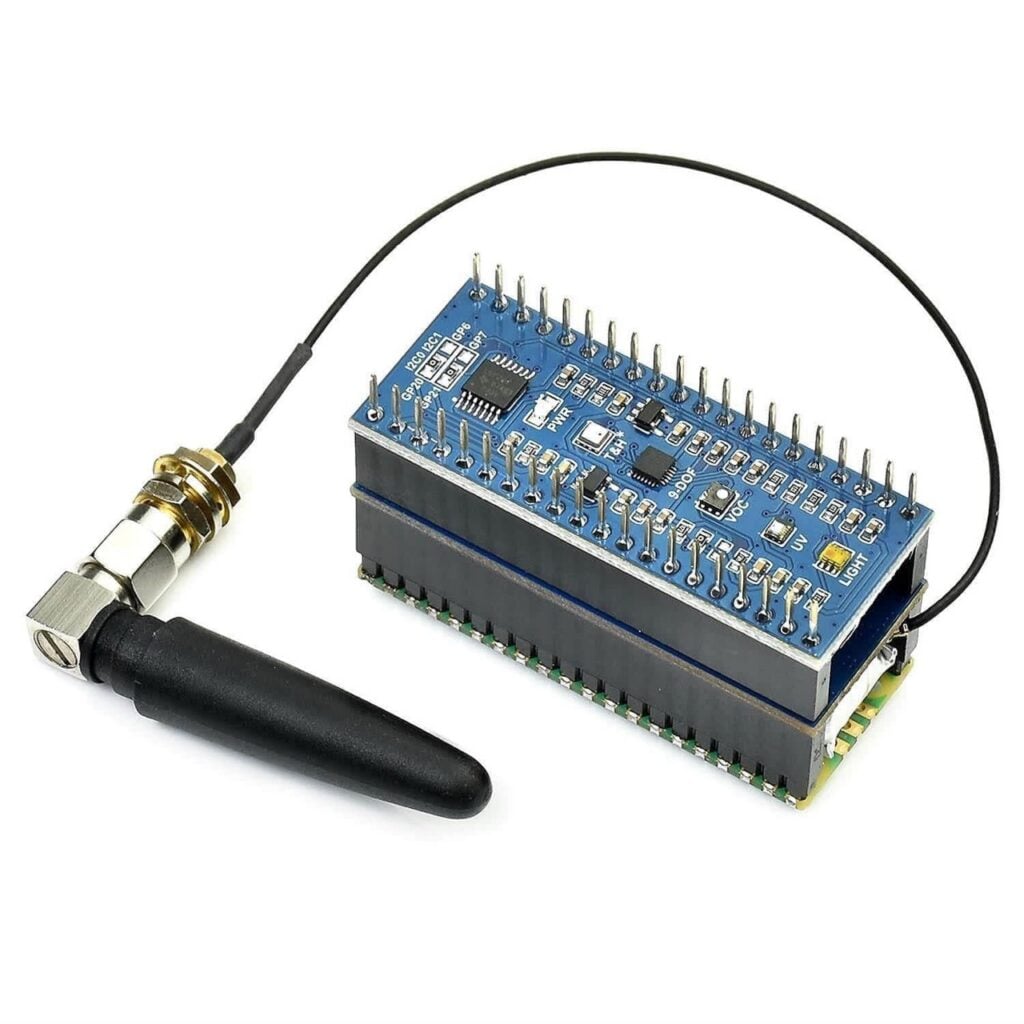
This Waveshare LoRa module (£14/$19) is based around the SX1262 transceiver, which offers superior power efficiency and slightly longer range than the earlier SX1276. The board features twin female headers, so all you need is a Raspberry Pi Pico equipped with male headers to plug into it. It even extends Raspberry Pi Pico’s pins to the top.
Along with the LoRa module itself, the package includes a bonus 600mAh 3.7V LiPo battery connected to the board’s charging IC, so you’re all set up for remote power.
Note that while The Pi Hut sells the 868MHz-band version of this LoRa module for use in Europe (including the UK) with a ‘stub’ antenna supplied, Waveshare stocks three versions, each tuned to a different frequency — make sure to choose the right one for your region.
While the Waveshare documentation isn’t that easy to follow, there are C/C++ libraries with some code examples to try out — no MicroPython ones, but you could use an existing SX126x library .
Superb value for money, includes a LiPo battery and an antenna.
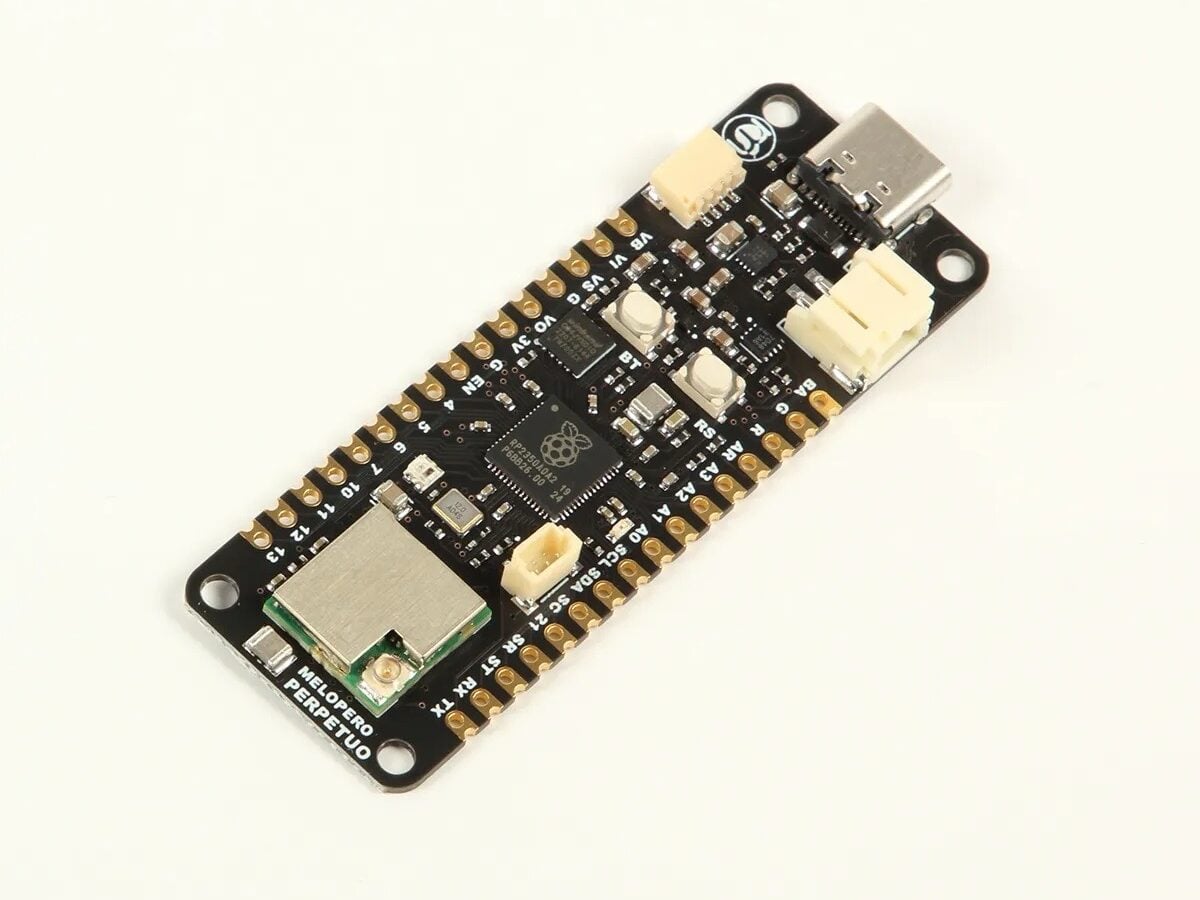
With a built-in Raspberry Pi RP2350 microcontroller chip (as used on Raspberry Pi Pico 2), this all-in-one LoRa board (£21/$28) has everything you need to start communicating with a LoRaWAN network gateway. Alternatively, you could use it in a simple peer-to-peer setup with another LoRa node.
Equipped with an Embit EMB-LR1276S LoRa radio module, the Perpetuo operates on the UK/European standard 868MHz carrier frequency using the default firmware, but it can be tweaked to use the 915MHz band. You’ll also need a suitable external RF antenna — it’s vital you connect one before powering up this, or any other, LoRa board, otherwise you may cause damage.
With a low power mode, the Perpetuo is very energy efficient. Power is provided by a LiPo battery (not supplied) that can be recharged via the USB-C port. The latter can be used with an optional solar panel (typically via a voltage regulator) to keep the board running indefinitely when it’s off-grid. A Qwiic/STEMMA QT connector makes it easy to add one or more sensors. In addition, the board has 32 standard pins, including 20 GPIOs.
An energy-efficient LoRa node with a handy Qwiic/STEMMA QT port.
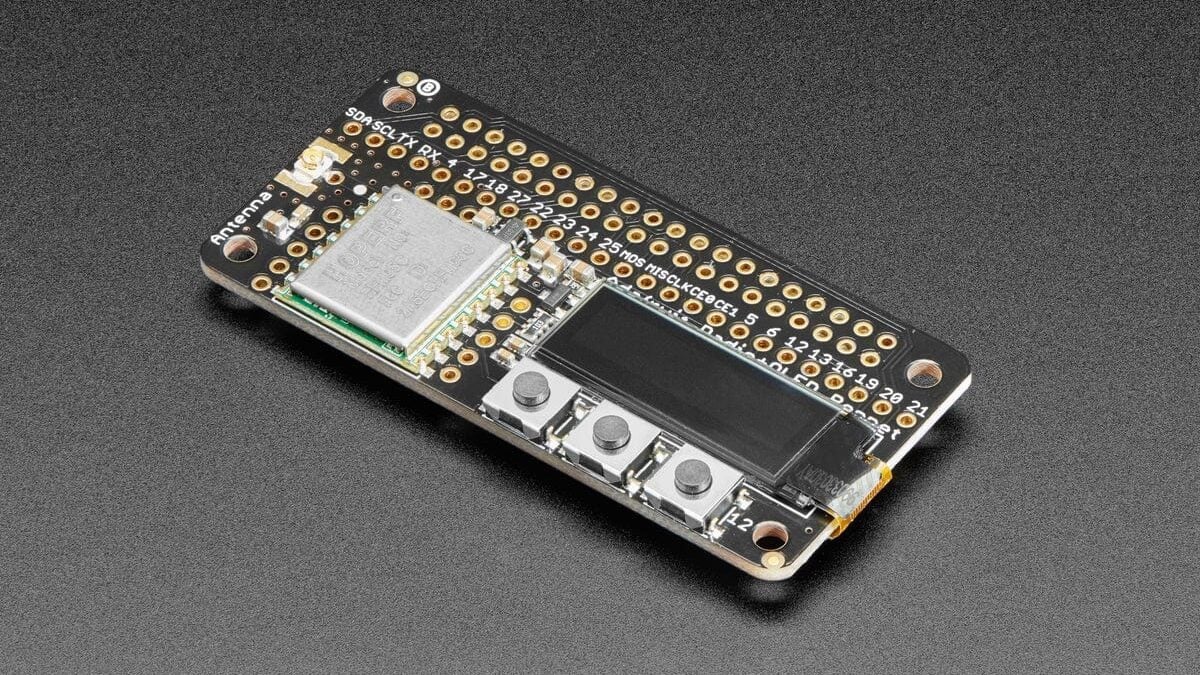
This LoRa ‘Bonnet’ (£31/$42) can be mounted onto the GPIO header of any standard 40-pin Raspberry Pi computer. While it’s labelled as ‘915MHz’ on the Adafruit site, it can use either the North American/Australian 915MHz ISM band or the European 868MHz band — you just need to make sure you set the correct band for your region in your programs. Fortunately, CircuitPython firmware and libraries make it easier to set up and use than some other boards.
Another bonus is the 128 × 32 OLED screen that can be used to show status messages. There are also three tiny buttons you can use to create a user interface or send test messages.
For the antenna, you can attach one to the U.FL connector on the board, or even just solder a piece of wire to the pad next to it. One slight drawback is that its RFM95W radio module, while reliable and well documented, uses a classic SX1276 LoRa transceiver that isn’t as power efficient as some later versions.
It works with any Raspberry Pi and the on-board screen is useful.
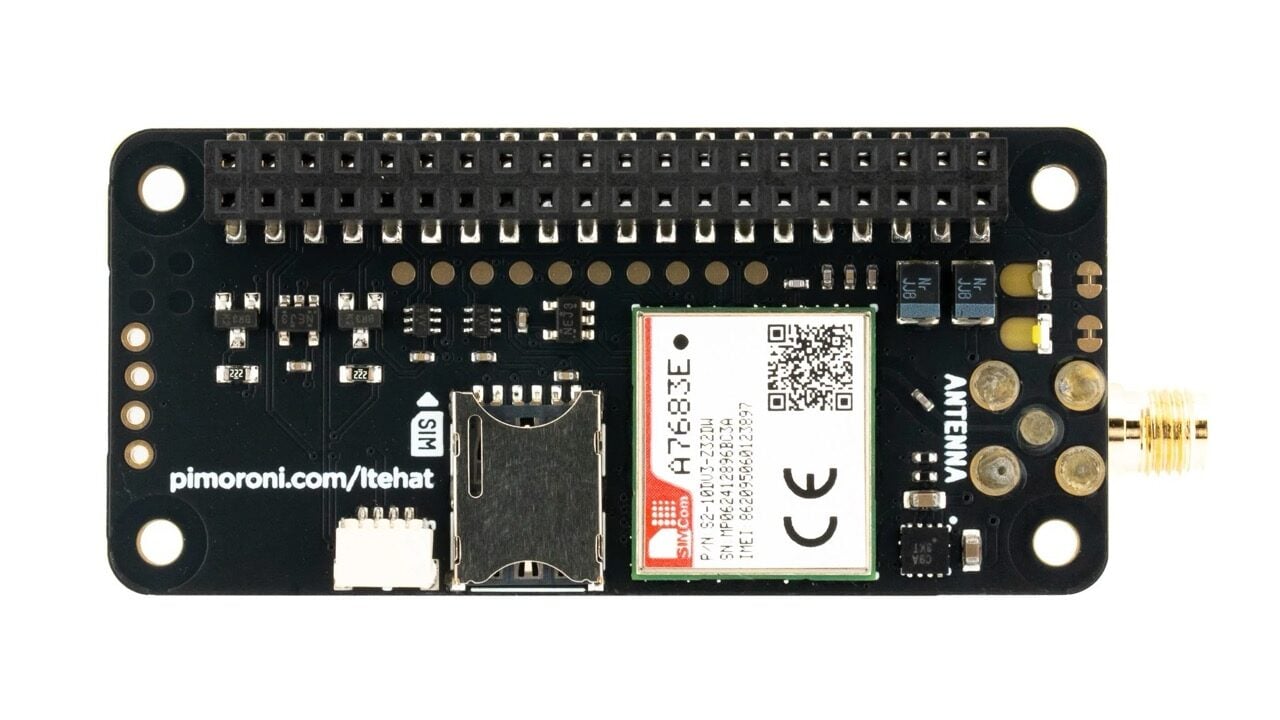
If you need anything more than small data packets from a remote device, 4G cellular is ideal. As well as low latency, it offers plenty of bandwidth — you could even stream video, such as from a wildlife camera.
The slimline Clipper HAT Mini (£30/$33) fits flush onto a Raspberry Pi Zero, but will also work with any standard-size 40-pin model if you use a booster header. Based around the SIMCom A7683E 4G LTE module, it takes a nano SIM card and can upload data at up to 5Mbps (or download at 10Mbps). Bonus features include two user buttons, status LEDs, and a Qwiic/STEMMA QT connector. It’s also easy to set up using Pimoroni’s starter guide.
Note that this HAT is designed to work with UK and European 4G LTE cellular bands, so it is unsuitable for use elsewhere. You’ll also need a compatible antenna to attach to the board’s SMA connector — Pimoroni supplies a short stick (52mm) type for under £4.
A super-value slimline 4G board.
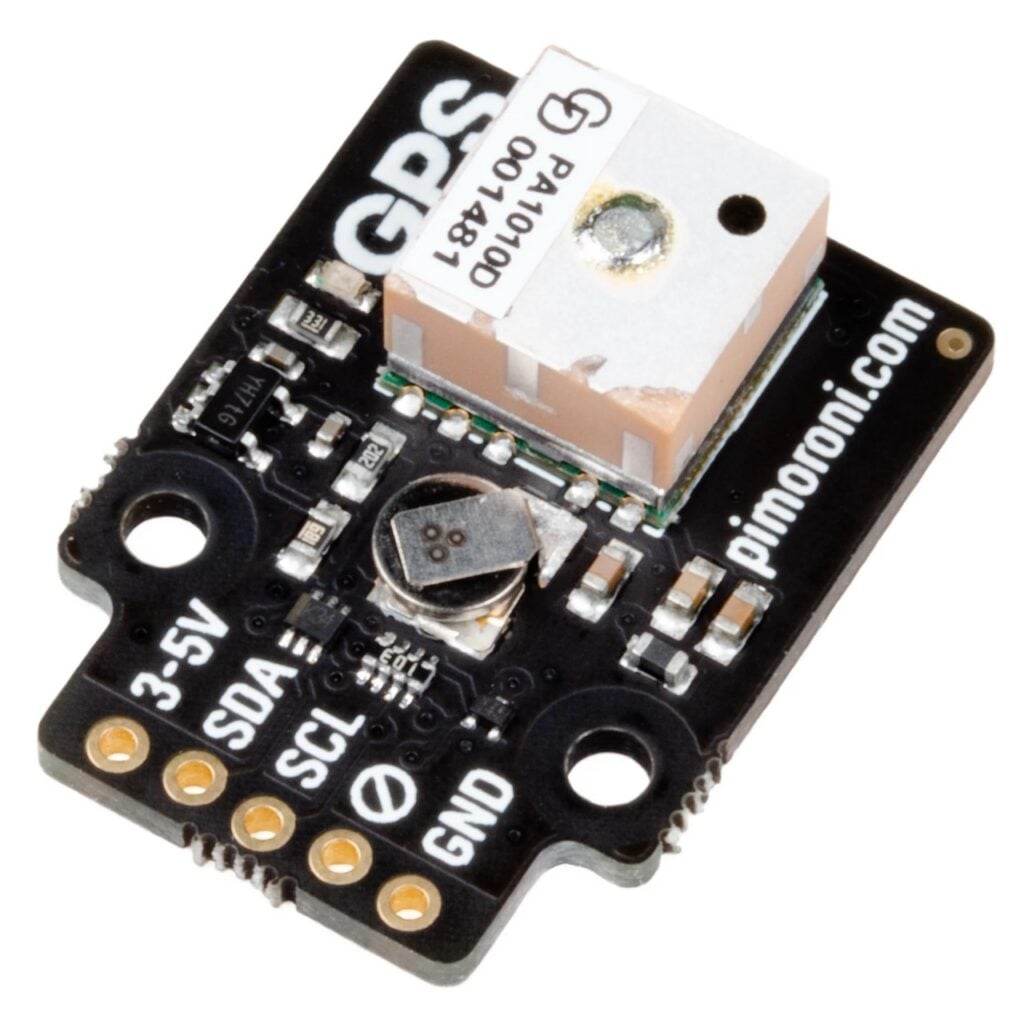
While billed as a GPS board, Pimoroni’s tiny breakout board will also work with the EU’s GALILEO system (among others) once you update its firmware. This means you should be able to find your position, along with the ultra-accurate time, wherever you are in the world.
With an integrated antenna and low power draw, the board’s postage-stamp-sized PA1010D module (£30/$33) is ideal for smaller maker projects requiring location data. Scanning for signals from satellites, it supports up to 210 pseudo-random noise (PRN) channels with 99 search channels and 33 simultaneous tracking channels. In most cases, with no major obstructions, it should provide your accurate location within a few seconds.
The board’s design takes Pimoroni’s Breakout Garden form factor, so it can be slotted into a Breakout Garden HAT for Raspberry Pi. Alternatively, you can solder on one of the two supplied male pin headers and connect it up directly to the GPIO pins.
Pimoroni’s Python library makes software setup simple. You could even use the breakout with a Raspberry Pi Pico via Michael Bell’s PA1010D MicroPython module .
Ideal for portable projects, enabling you to track your precise location.
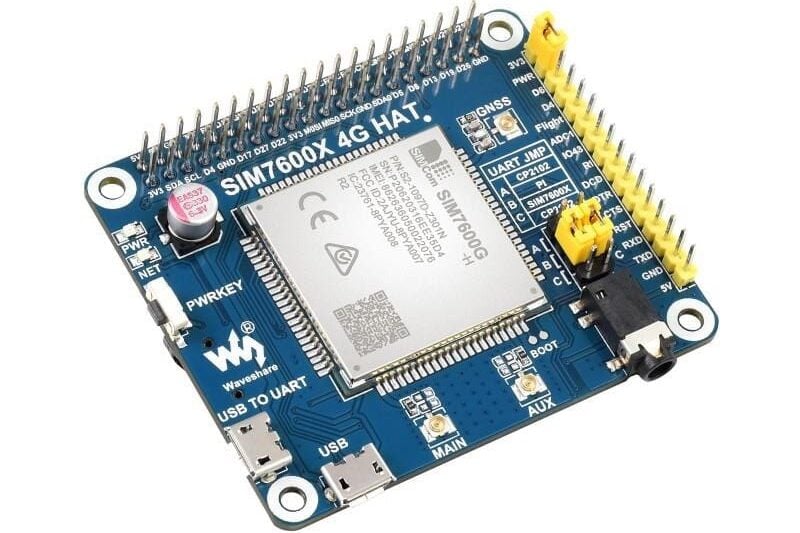
If you need to send lots of data, this 4G HAT (£80/$107) has you covered, no matter where you are in the world. Its industrial-grade SIM7600G-H 4G module is designed to work in any region (the ‘G’ in the name stands for ‘global’), supporting a whole range of 4G cellular frequencies. It also supports 3G and 2G services and can even handle SMS text messages and phone calls (by connecting a headset to its 3.5mm jack).
As an LTE Cat 4 model, it can transfer data at much faster rates than a Cat 1bis module, such as that on the Clipper HAT Mini: up to 50Mbps upload (150Mbps download), although real-world speeds may be a little lower depending on your signal. To enable this, a USB cable (supplied) connects it to Raspberry Pi (as well as the GPIO header).
The HAT comes supplied with a wideband LTE 4G antenna and one for GPS — yes, it has that functionality built in as well, which works with various positioning systems.
A high-end 4G HAT with faster data transfer and built-in GPS.
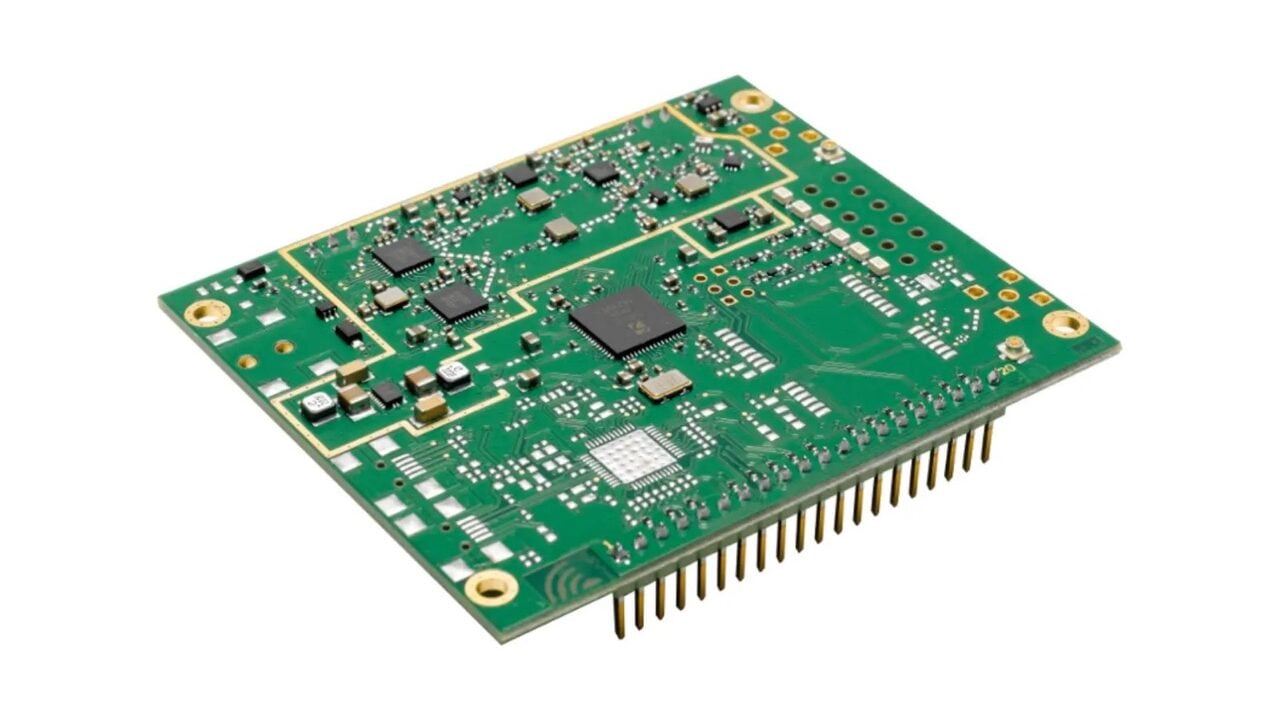
You can build your own multichannel LoRaWAN gateway with a Raspberry Pi computer and a suitable ‘concentrator’ board. For use in Europe (including the UK), this 868MHz model (€149) is fully compliant with The Things Network and Stack; for other regions, check out the RAK range of boards.
You can find Raspberry Pi Official Magazine on Facebook , X , Threads , LinkedIn , and Mastodon . You can also contact the team via email: [email protected]
No boards using the Seeed Studio Wio-E5 module are mentioned. Do any of the chipsets mentioned here provide a peer-to-peer mode interoperable with the Wio-E5? I have found the P-P mode useful for U.S. amateur radio operations: https://github.com/pmunts/libsimpleio/blob/master/doc/WioE5LoRaP2P.pdf
Δ document.getElementById( "ak_js_1" ).setAttribute( "value", ( new Date() ).getTime() );
規格
- 資料傳輸速率
- 300bps to 50kbps
- 最大傳輸距離
- 15km (9 miles)
- 電池供電
- 600mAh 3.7V LiPo battery included
- 支援頻段
- ISM (Industrial, Scientific, and Medical)
- 區域限制
- 需遵守當地政府設定的引數,如Ofcom、FCC、ETSI
- 模組型別
- SX1262 transceiver-based
來源連結
規格與發布資訊引用自官方來源;本文評析為本站原創。
LoRa無線模組可以提供穩定的資料傳輸,尤其適合IoT應用。它通過使用ISM頻段,在不需許可的情況下進行無線通訊,並具備抗幹擾能力,最大傳輸距離達到15公里。
我們介紹了兩種LoRa模組:Waveshare LoRa模組 (£14/$19) 和Perpetuo LoRa模組 (£21/$28)。前者具備更高的能效和更長的傳輸距離,而後者則可以直接連線至Raspberry Pi Pico進行低功耗資料傳輸。
雖然Waveshare的文件不太易於跟隨,但提供了C/C++庫和一些程式碼示例。Perpetuo模組則附帶一個UK/European標準868MHz載波頻率的天線,並預裝了預設韌體。
優點
- 超值
- 包括LiPo電池和天線
缺點
- Waveshare文件不易於跟隨
- Perpetuo模組需注意頻段選擇
討論區